Chapter Thirty-Four: How I Accidentally Became a Lobbyist
(Because Democracy is Apparently Not a Spectator Sport)
A humorous and heartfelt look at California school funding, LCFF, public school advocacy, and why one South Bay community traveled to Sacramento to fight for smaller class sizes.
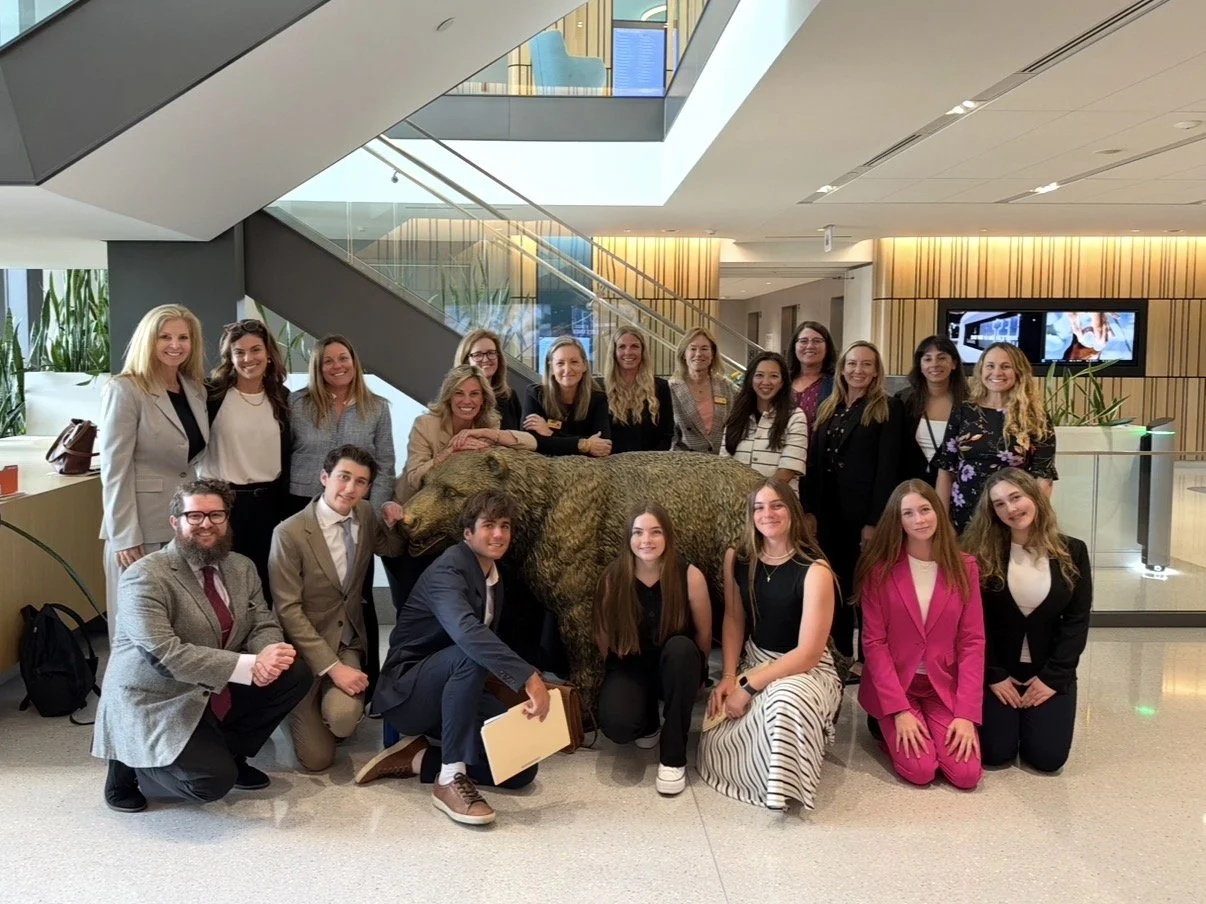
Members of a South Bay education advocacy delegation pose around the California bear statue inside the State Capitol during meetings about California public school funding and class sizes.
Dear Diary,
About a month ago I found myself disoriented by Southwest’s new boarding system, clutching a binder full of California education funding statistics, en route to a place I had somehow never been before despite living in California since 1985: Sacramento.
You see, I was now part of a scrappy little delegation of sleep-deprived PTA moms, teachers, school board trustees, and students who had accidentally become lobbyists. Not the glamorous kind with a power suit and a steakhouse reservation in Sacramento. More the kind who wakes up at 4:15 in the morning, panic-packs protein bars into a tote bag, and pays $27 for airport yogurt while trying to remember what LCFF stands for.
Actually, scratch that. I now know exactly what LCFF (Local Control Funding Formula) stands for because apparently my personality has evolved into “woman constantly explaining California public school funding formulas against everyone’s will.”
A few months ago, I was living a relatively normal South Bay existence. Organizing middle school dances and ice cream socials for the PTA. Driving Olivia and her teammates to sports practices and tournaments with the logistical complexity of a small military operation. Trying to locate seven missing water bottles and wondering where all our forks had gone. Then our school district announced devastating cuts.
Not “we may need to tighten our belts a little” cuts. More like beloved teachers with over a decade of experience and Teacher of the Year awards suddenly receiving layoff notices while the rest of us started panic-googling phrases like “credentialed teacher layoffs” and “what exactly is a combination class?”
Before long, a large group of very determined parents, teachers, PTA leaders, school board trustees, union representatives, and students collectively arrived at the same conclusion:
“Maybe we should go directly to Sacramento and explain that forty-four kids in Algebra is, in fact, too many children.”
So that is what happened.
Most of the group flew up and back in a single day like educational funding Navy SEALs. I personally went up a day early and came home the following morning because I am middle-aged and no longer possess the structural integrity required for a nineteen-hour advocacy marathon.
Still, by sunrise the next morning, all of us found ourselves standing in the Capitol carrying folders, coffee, and the exhausted but focused energy of people who had absolutely not planned on becoming experts in state education funding.
So here is the truly confusing, or at the very least, deeply counterintuitive, part:
Some of California’s most affluent communities receive some of the lowest levels of state funding for public education.
I know. I also thought wealthy communities automatically had well-funded schools. I assumed our high property taxes funded them. I assumed all the fundraising was for enrichment. New programs. Technology. Fancy extras. Maybe a climbing wall or a student-operated cold brew station.
At one point during this process, we compared our district to Inglewood Unified, and the numbers genuinely stunned me. The two districts have nearly identical enrollment and similar special education obligations. But Inglewood receives nearly double the per-pupil funding we do and currently has roughly $133 million sitting in reserves. For context, that is larger than our district’s entire annual operating budget.
To be clear, this is not an argument that Inglewood students deserve less. Their district serves a dramatically higher percentage of high-needs students, which is precisely what California’s funding formula is designed to address. Conceptually, this makes sense. Students facing greater challenges require greater support and resources.
But the reserve levels also suggested something else I had never really considered before: receiving additional funding and effectively deploying it are not necessarily the same thing. Even with significantly greater levels of funding, many districts across California still struggle with declining enrollment, lower academic performance, and competition from charter schools.
Meanwhile, our district was discussing how to continue functioning on increasingly thin margins, while simultaneously relying on local fundraising to avoid class sizes that are one folding chair away from violating the fire code.
It felt a little like discovering your neighbor has an pantry stocked with prosciutto and brie but somehow still keeps serving Lunchables, while you are over here trying to stretch one string cheese into an entire after-school snack program. The more we learned, the less this felt like a story about one district getting too much and another getting too little. It started feeling more like a system struggling to work well for anyone.
But back to our trip. Until that day, I think I had subconsciously assumed the Capitol operated like some kind of impenetrable political fortress. Instead, we mostly found people willing to open doors and listen.
Our first major meeting took place in a hallway with the Chief of Staff to the Chair of the Assembly Education Committee, with most of us pretending we had not learned at least half of these acronyms and data points on the plane ride over that morning.
Then the students started speaking.
And suddenly the adults in the room stopped being the most important voices.
The students were extraordinary. Thoughtful. Articulate. Calm. One by one, they explained what larger class sizes actually feel like. What it feels like watching beloved teachers receive layoff notices. What it feels like to sit in classrooms already stretched beyond capacity.
At one point, the students were literally opening doors for us around the Capitol. Legislative offices that might have brushed off another group of adults suddenly invited us in because earnest teenagers were standing there asking if they could have five minutes to explain what was happening in their schools.
And honestly? It worked.
Turns out emotionally intelligent teenagers are significantly more persuasive than middle-aged adults carrying spreadsheets.
Later that day, we sat in a large conference room with the Governor’s Chief Deputy Legislative Secretary. Every single person at the table had an opportunity to speak. Parents. Trustees. Teachers. Students.
Something shifted during that meeting.
Until then, I think many people in Sacramento genuinely believed communities like ours were fundraising primarily for extras. They did not realize that many districts are now fundraising simply to preserve normalcy. To keep class sizes manageable. To maintain counselors. To avoid losing excellent teachers.
At one point, the legislative secretary had tears in her eyes as she acknowledged that districts like ours may have become a blind spot in the system and are at a breaking point.
And I realized something that now feels painfully obvious.
We elect people and assume they know what we need. But how can they advocate for problems they do not fully understand? Corporations have lobbyists. Industries have lobbyists. Billionaires have lobbyists.
Ordinary citizens often assume someone else already explained the problem.
Sometimes nobody did.
Apparently democracy is not just about showing up at the ballot box, but also about staying actively involved with the people elected to represent us.
Of course, we still have to vote to put the best players on the field. Which, Diary, may partially explain why I am now sharing a practical little South Bay voter guide entitled “The Raucous Caucus.”
But, back to our trip. So there we were. A group of sleep-deprived parents, teachers, students, and public school advocates wandering the halls of the Capitol trying to explain that “high-performing district” does not necessarily mean “financially secure district.”
And honestly, I have never been prouder of our community.
Especially the students.
Watching them realize their voices mattered may have been the most powerful part of the entire experience. Government buildings suddenly stopped feeling abstract and untouchable. The students saw firsthand that democracy is not just something adults argue about on cable news. Sometimes it is simply ordinary people showing up, telling the truth, and refusing to quietly disappear.
And the truth is, I think some of it actually worked.
A few weeks later, the Governor’s May Revision included several encouraging education adjustments, and news coverage surrounding the update specifically referenced parents, students, and advocates who had been showing up, speaking out, and quite literally banging on legislative doors.
The fight is obviously far from over. California is still withholding billions in education funding, and districts like ours remain financially fragile in ways most people do not fully understand. If anything, the trip made many of us realize this cannot be a one-time field trip to Sacramento. The coalition needs to grow. More districts like ours need to find each other. And we need to keep showing up.
Especially the students.
Because once young people realize their voices can open actual doors in the Capitol, it becomes very difficult to convince them they are powerless again.
Also, for the record, I still do not understand how anyone finds the correct legislative office on the first try.
Very truly yours,
Maya
p.s. — If you agree that California school districts should actually be funded at levels capable of supporting basic educational needs, we put together a nifty little one-click email for legislators.